Laura Ingalls Wilder is the author of some of the best-known books about life as a pioneer. In this enlightening biography, children will be able to read about pioneer life the way that Laura experienced it. Through striking images, fascinating facts, and easy-to-read text, readers will learn about what impact the Homestead Act and malaria had on the Ingalls family, as well as the various types of homes they and many other pioneers had to live in, like dugouts and homes made of sod. This fascinating book also includes a feature on other famous pioneer women to keep readers engaged and interested in life as a pioneer!

Readers will discover what difficult lives slaves led in this nonfiction title. With its stunning facts, images, supportive text, and a helpful glossary, this book allows readers to learn about some of the most notable aspects of slavery in America, including slave auctions and masters, abolitionists, the Underground Railroad, Dred Scott, Abraham Lincoln, and the Emancipation Proclamation.

In this biographical book, young readers will learn about the brave life of Harriet Tubman. Readers will discover how Tubman bravely escaped from her life as a slave to cross the Mason-Dixon line into freedom and how she helped hundreds of other slaves into freedom through the Underground Railroad with the help of abolitionists. The vivid images, stunning facts, and supportive text work in conjunction with the helpful glossary, index, and timeline of Tubman's life to give readers an engaging experience as they move from cover to cover.

Sitting Bull was a powerful Hunkpapa Lakota Indian Chief who, along with the Lakota Indians and other nearby tribes, was involved in brutal battles with the United States over land issues. All tribes that were fighting to avoid the reservation eventually surrendered, and the Lakota people were no exception.

Why did the Civil War begin? Which states were part of the Union and which were part of the Confederacy? Readers will learn the answers to these questions and more as they move through this fascinating nonfiction title. The easy-to-read text, engaging facts, and vivid images and illustrations help highlight some of the aspects that led up to the Civil War including the slavery, the Underground Railroad, abolitionists, the Fugitive Slave Act, the Dred Scott Decision, and the Lincoln-Douglas debates. The accessible table of contents works in conjunction with the supportive glossary to help readers navigate their way through the book.

Abraham Lincoln is often considered one of the greatest American presidents. Readers will discover the incredible things Lincoln accomplished during his time as president and the impact he made on slavery, the Civil War, and the country. The easy-to-read text and enlightening facts highlight such aspects of Lincoln's presidency as the Emancipation Proclamation, the Battle of Gettysburg, and how the popular and electoral votes led to his nomination. Detailed images and illustrations show readers real examples of documents and photos of Ford's Theater, where John Wilkes Booth committed Lincoln's assassination. Readers will feel engaged from cover to cover!

Robert E. Lee is often considered one of the finest leaders of the Civil War. This engaging biography allows readers to discover the honorable life Lee led, and learn how he made a great impact as a leader of the Confederate Army. Featuring such highlights in Lee's life as the Mexican War, the succession of the South from the Union, his relationship with Thomas "Stonewall" Jackson, and the Battle of Gettysburg, this book uses detailed images and illustrations in conjunction with fascinating facts and easy-to-read text to entertain and enlighten readers as they move from cover to cover.

This interesting nonfiction title allows readers to explore some of the most well-known battles of the Civil War. Through stunning facts, easy-to-read text, and colorful images and illustrations, this book will take children on a historical journey with the Confederate and Union armies as they fight the Battle of Bull Run, Battle of Gettysburg, and the Siege at Vicksburg. Along with the infamous battles, the Gettysburg Address, treason, and the Declaration of Independence are discussed to give readers a better understanding of why the Civil War began and the impact it had on Americans.

Ulysses S. Grant was a great war hero and served two terms as the President of the United States. Readers will learn about his life in this appealing biography that highlights his time working as secretary of war as well as leader of the Union Army--including such events as the Battle of Shiloh, Vicksburg, and what he told Confederates about terms of surrender. The vivid images and illustrations work in conjunction with intriguing facts, helpful glossary, and easy-to-read text to engage readers from cover to cover!

Computers are the focus of this book. A timeline of the invention of the computer provides a clear explanation of how our world has changed since the advent of this important invention.

Explores how different money is used in different parts of the world.

Clear definitions supported by every day examples and easy hands-on activities introduce young scientists to inclined planes.

In graphic-novel format, this book chronicles the dust storms which plagued the plains states from 1930 to 1939 while depicting one family's efforts to escape the devastation and start a new life in California.

Eco-friendly energy is explained. The most current information is provided while establishing the understanding that it does not take much to make the world a better place.

One of the most sacred yet volatile countries in the world is Israel. Its history helps the reader to understand the current crisis it faces.
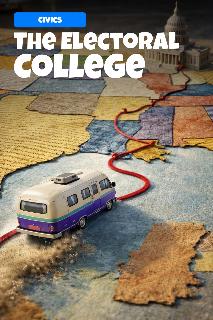
Readers are taken on a journey to the chaotic U.S. election of 1824, where Andrew Jackson won the popular vote but lost the presidency due to the Electoral College system and political maneuvering. The book highlights the importance of understanding election rules and the balance of power between states, while also addressing debates about the fairness of the system. With vibrant illustrations and accessible explanations, this book is perfect for young readers and anyone looking to better understand the mechanics of American democracy.
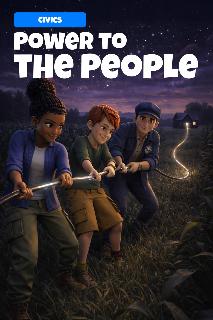
In Power to the People, Amaya, Jeffrey, and Scout travel to rural America during the Great Depression, where they meet a family living without electricity because private companies won’t serve remote areas. As they help bring power to the farm through a government program, the kids learn how public services can step in when businesses leave communities behind. The story connects the struggle for rural electrification in the 1930s to modern efforts to expand internet access today.
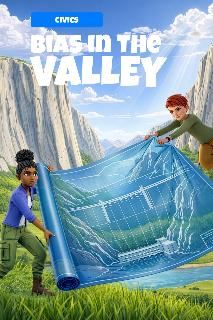
What happens when two sides see the same issue in completely different ways? Dive into this engaging civics adventure that explores the impact of bias on decision-making, communication, and compromise. Follow Scout, Amaya, and Jeffrey as they tackle a modern-day debate over a butterfly sanctuary versus a fire safety hazard, while learning from history’s biggest clash of “Nature versus Necessity” in the Hetch Hetchy Valley.
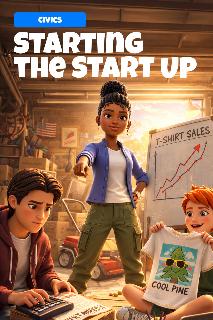
Travel through time with Amaya, Jeffery, and Scott to learn about Silicon Valley startups and how investment and risk work to expand business ventures. Watch as they apply their knowledge to their own camp start-up.
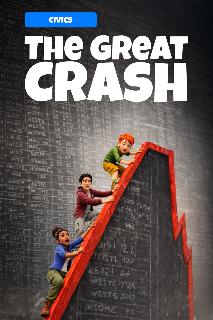
Travel through time with Amaya, Jeffery, and Scott to the Great Depression. Learn with them how a series of connected economic choices would create one of the nation's largest economic disasters.
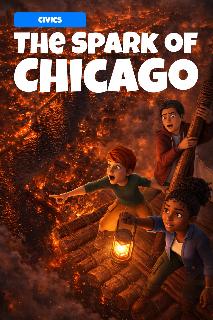
Travel through time with Amaya, Jeffery, and Scott to the Great Chicago Fire. Learn with them how poor planning can lead to a disaster.
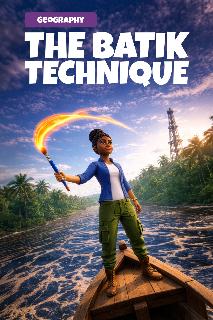
A group of young artists journeys to the Niger Delta, where they encounter a region shaped by rich natural resources and competing claims over land. As they immerse themselves in the local environment, they begin to understand how geography influences not only economic opportunity but also conflict, cooperation, and daily life. Throughout their travels, the artists draw a powerful comparison to Batik textile-making, where wax is carefully applied to create clear boundaries that give the artwork its structure and meaning. In the same way, they see how firm legal and geographical boundaries are essential for managing access to valuable resources. Without these boundaries, competing interests can lead to tension and instability. By connecting art, geography, and social systems, the journey reveals a deeper truth: the location of resources shapes how communities live and work, but it is the presence of clear laws, shared agreements, and cooperation that allows societies to thrive.
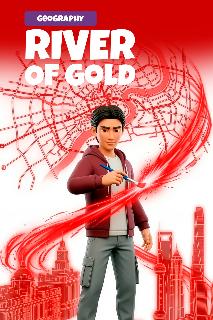
Join a group of young artists as they travel through China, exploring the idea that a city can be understood like a pictograph. Their journey takes a pivotal turn when they face the challenge of freeing a ship stuck in a river. What begins as a practical obstacle becomes a powerful lesson about the relationship between geography and prosperity. As they work through the problem, the artists come to understand how natural features—such as rivers, boundaries, and terrain—play a crucial role in shaping trade, movement, and economic success. Blending travel, art, and insight, the story reveals how cities are not just built spaces, but living representations of the land that supports them and the wealth that grows within those boundaries.
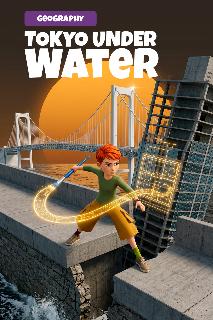
Follow a group of young artists as they journey to Tokyo, a city where human ingenuity has reshaped the natural landscape. Through firsthand exploration, they discover how engineers have reclaimed land from the sea, redefining the city’s geography to support its ever-growing population. As they delve deeper, the artists encounter the challenges architects face in such a dynamic environment—where limited space and unique terrain demand innovative, vertical design. Blending art, engineering, and urban theory, their experience reveals how Tokyo stands as a powerful example of creativity and adaptation in the face of spatial constraints.
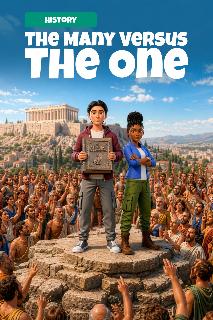
In The Many Versus the One, a group of students is swept back to ancient Athens, where they witness the birth—and the flaws—of early democracy. What begins as a classroom argument about fairness turns into a race to stop the Athenian Assembly from silencing minority voices through unchecked majority rule. By introducing the idea of a representative republic, the students learn that true democracy is not just about winning votes, but about protecting every voice. Blending history, debate, and adventure, this story explores how the struggle for fairness in the past still shapes the world today.